A fascinating day on two Hidden London tours, at Charing Cross and Moorgate stations, seeing a little of the places the public doesn’t normally get to see – a rather belated taking up a birthday present from last year – thank you!
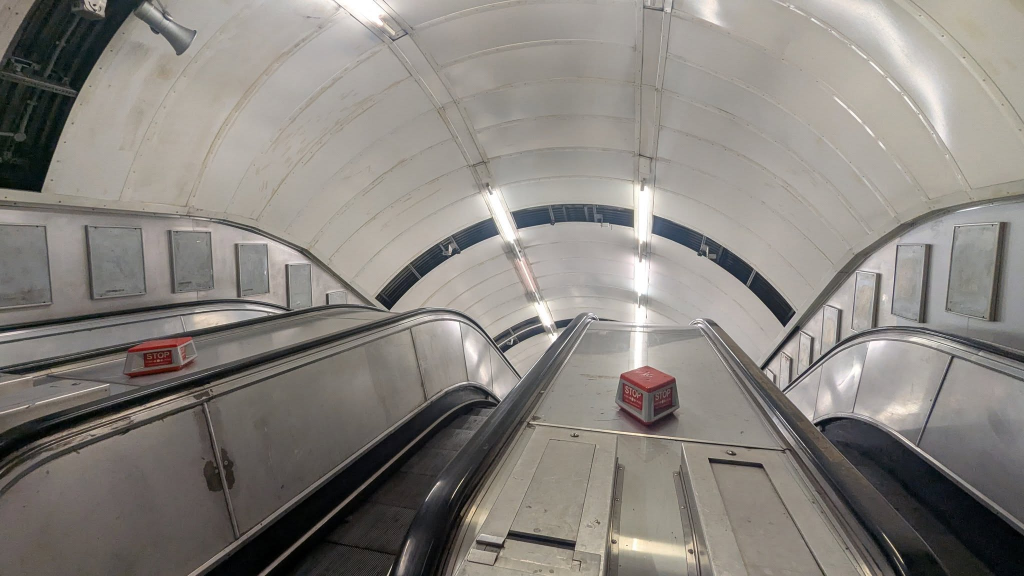
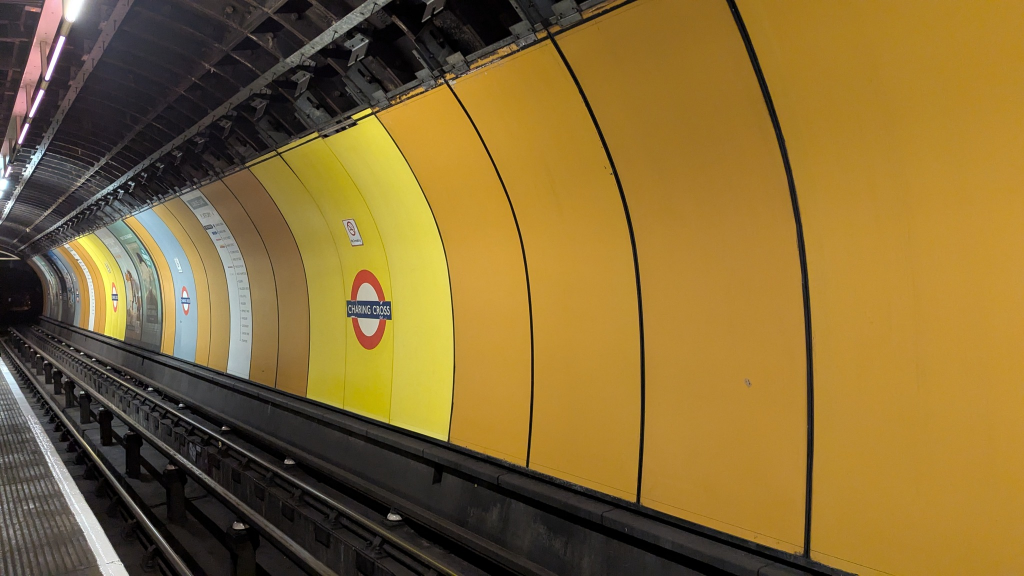
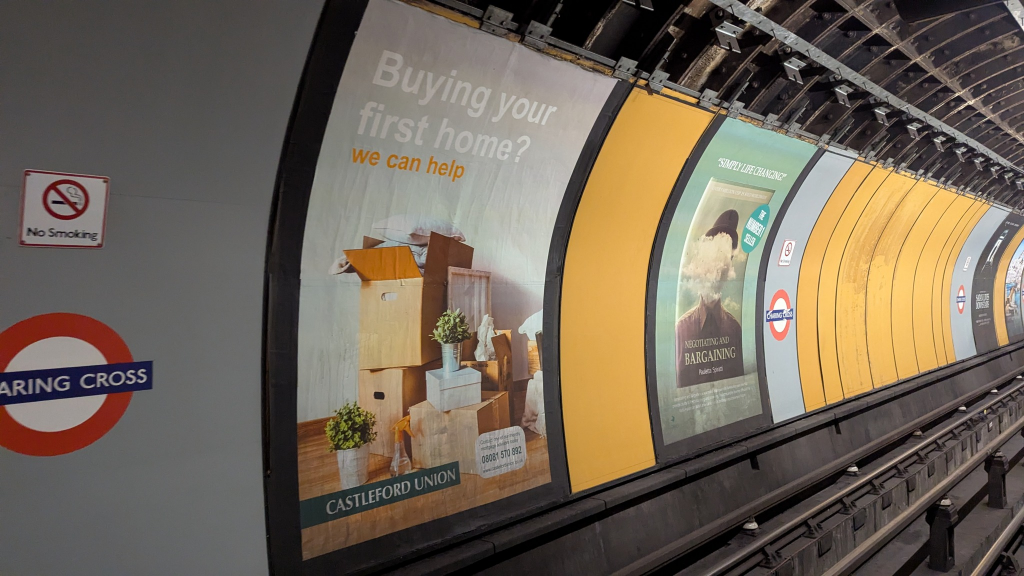
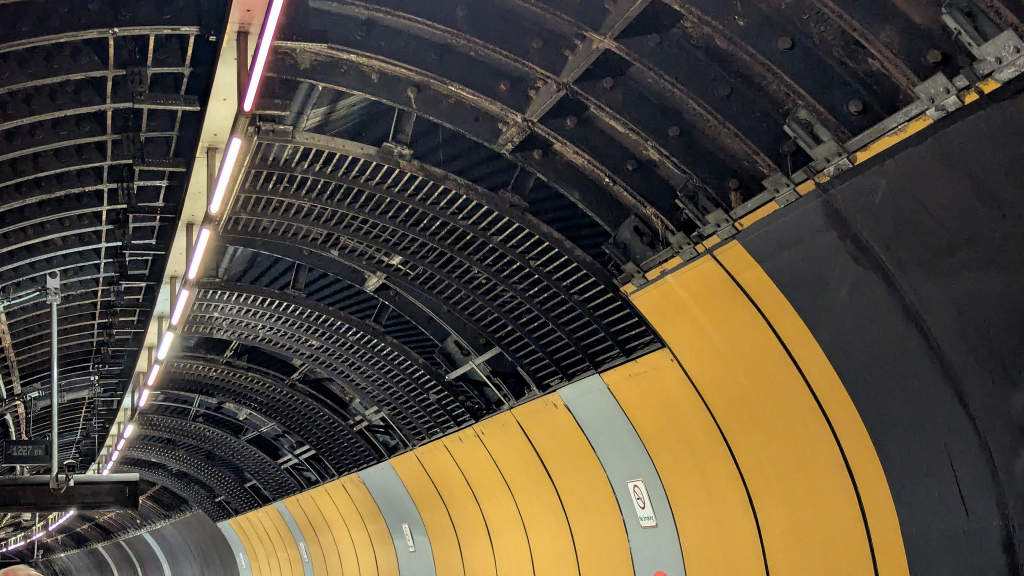
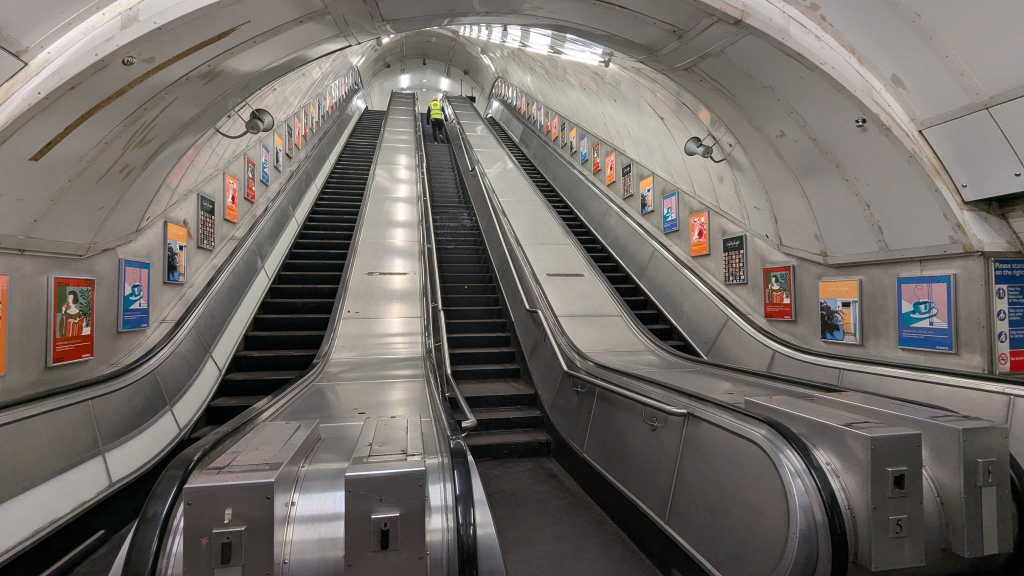
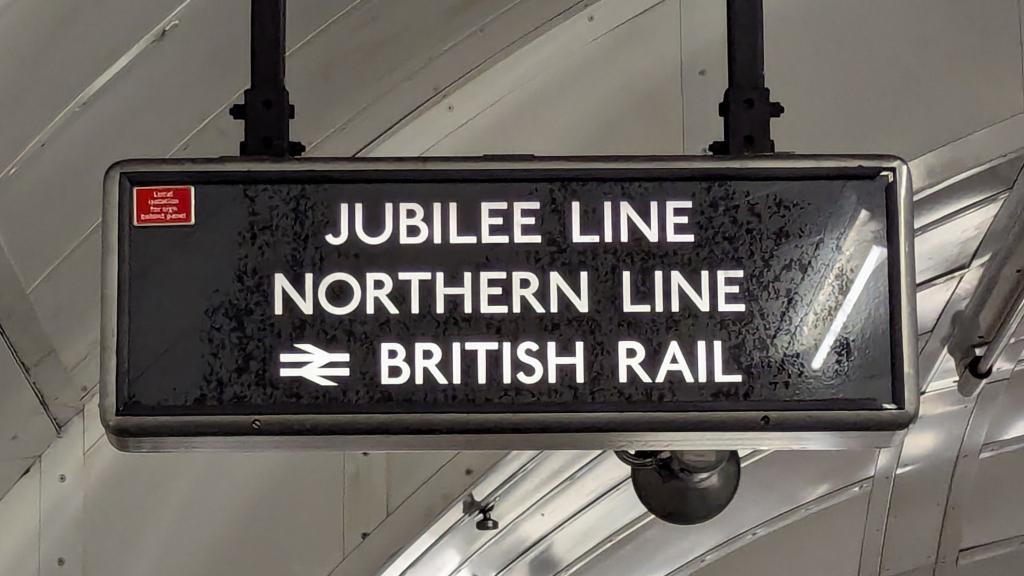
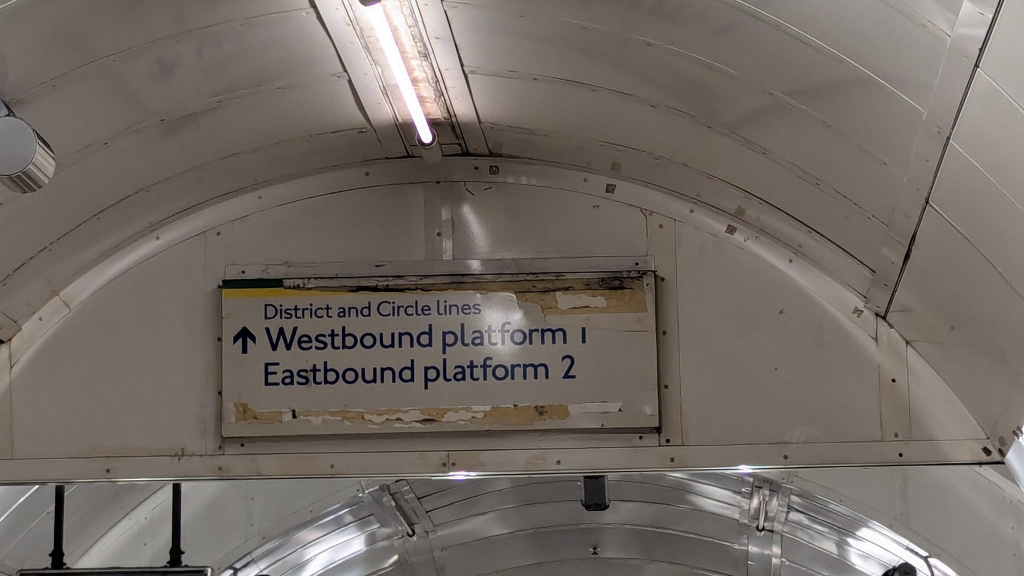
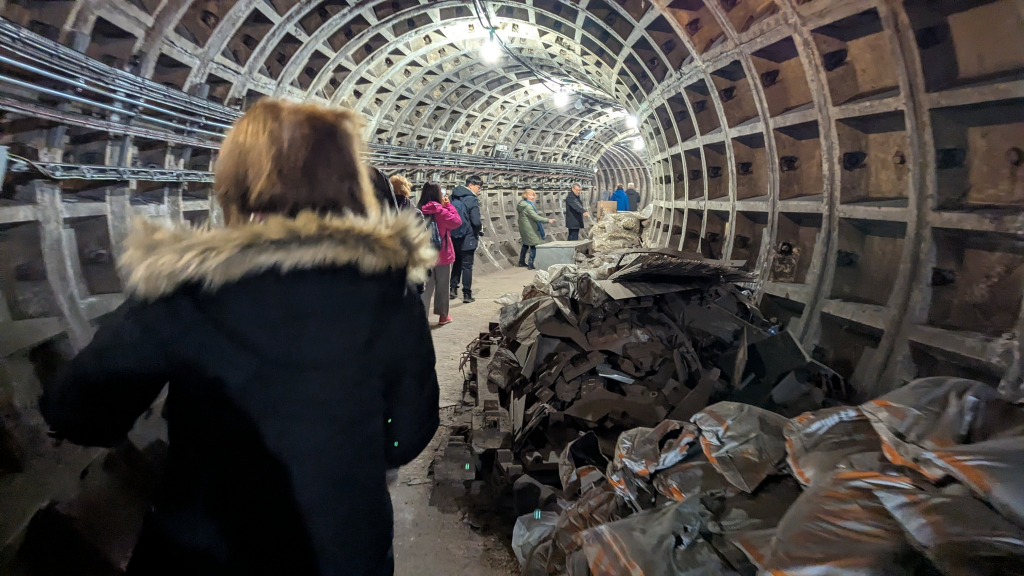
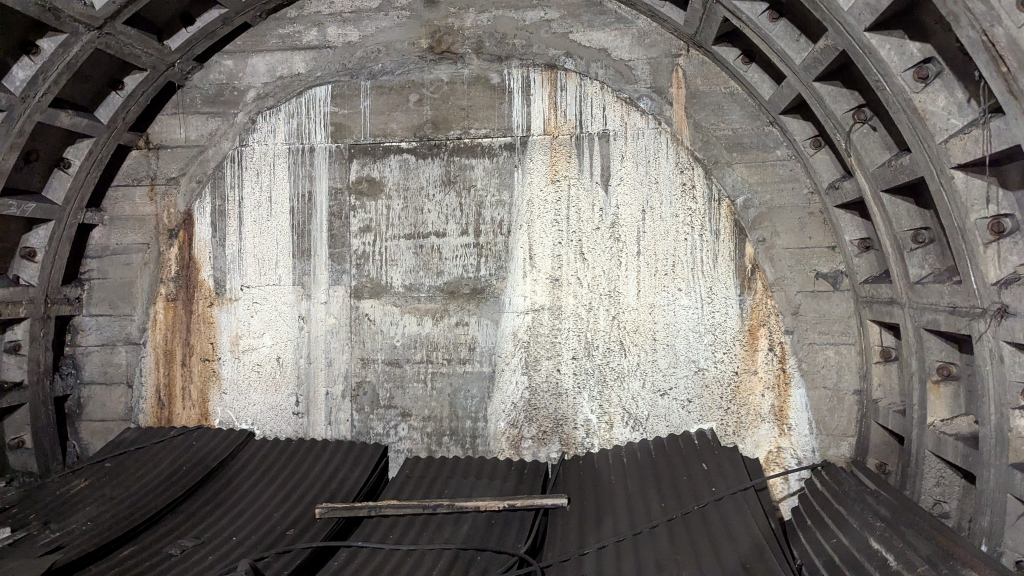
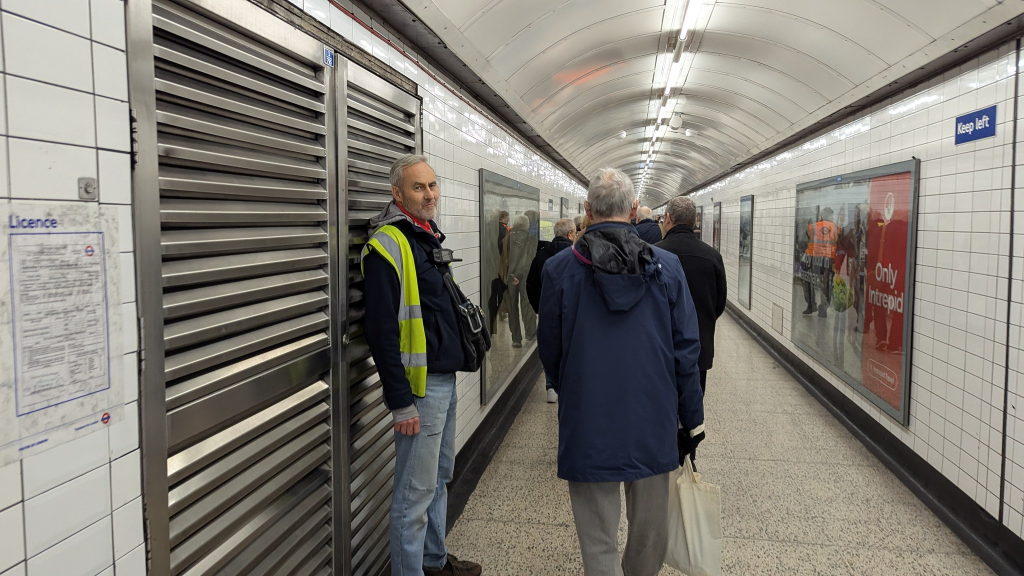
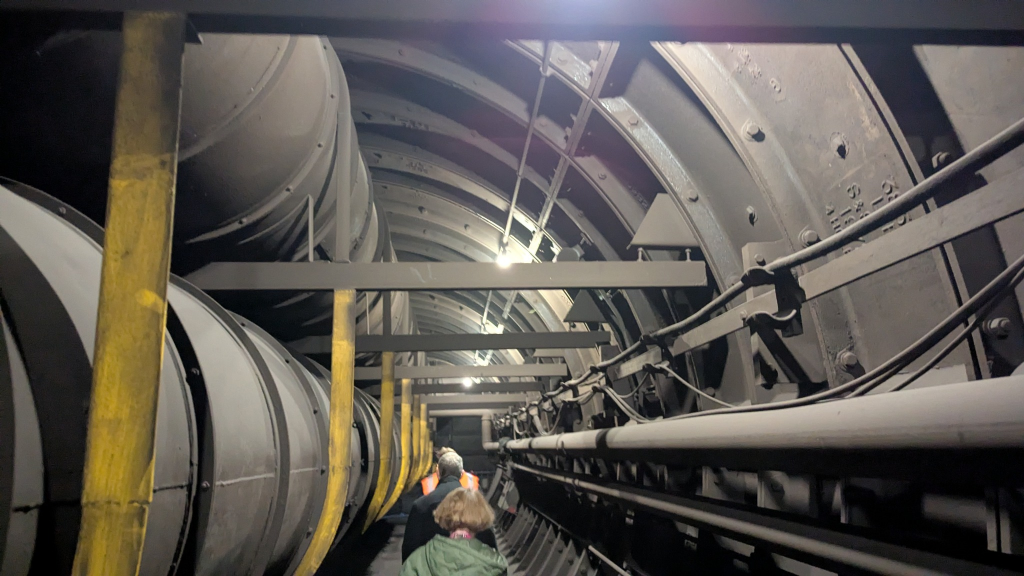
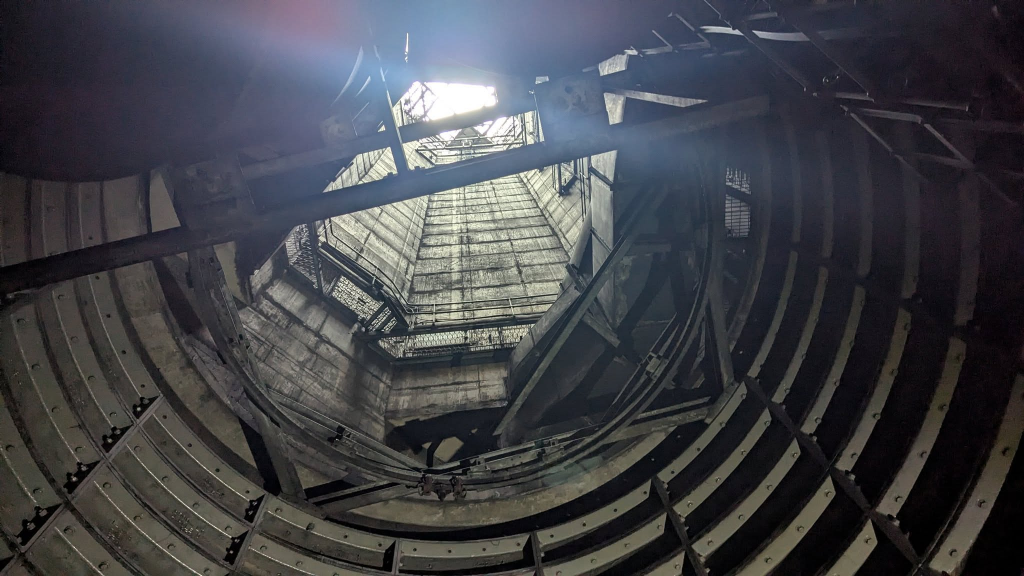
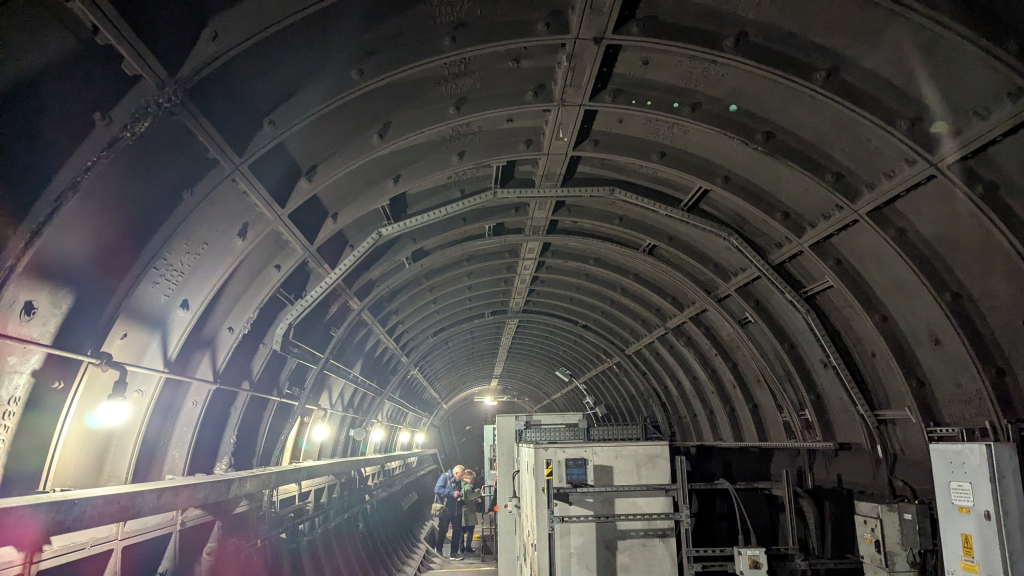
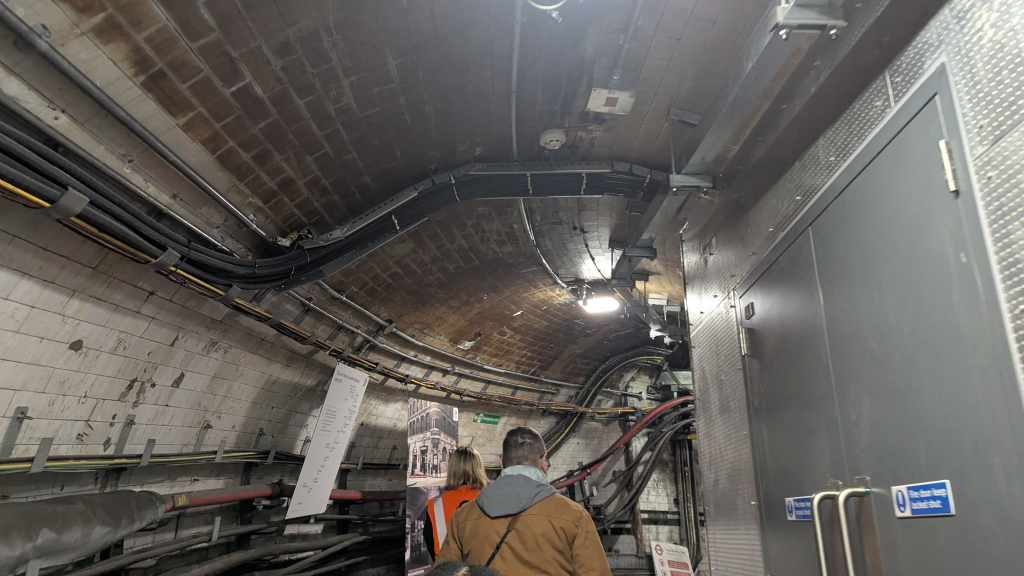
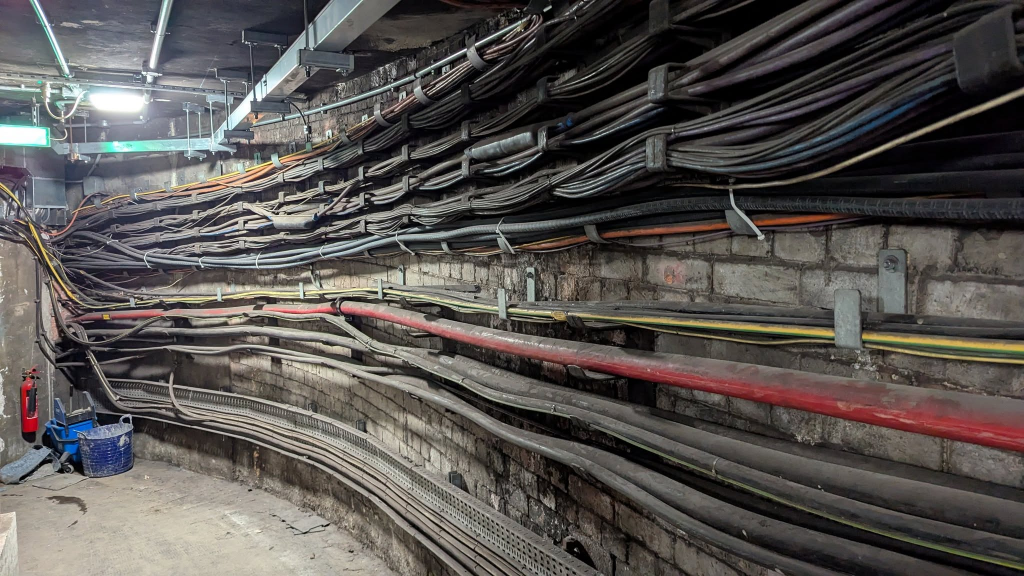
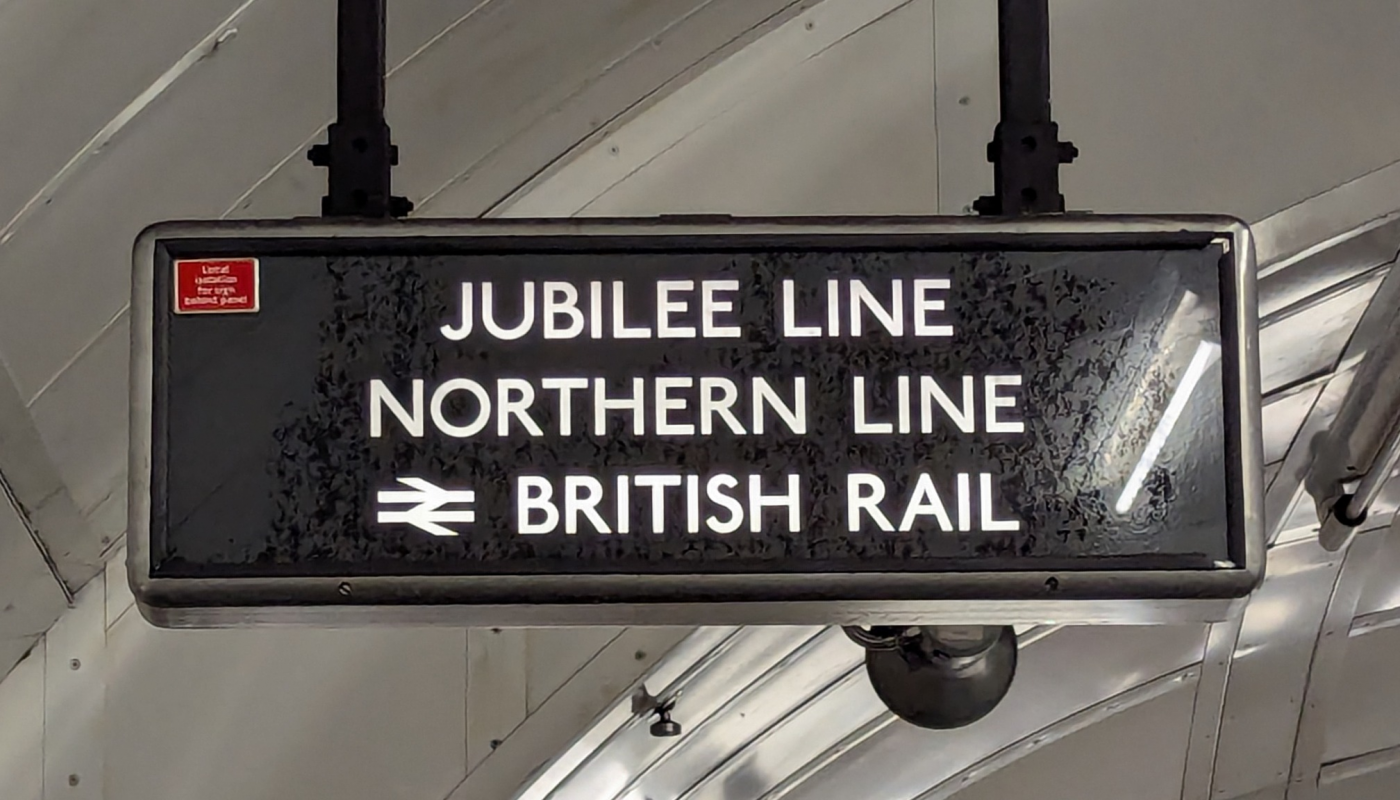
We’ve come through a locked door and here are one of the sets of disused escalators down to the former Jubilee Line platforms at Charing CrossThe bright colours of the line built in the 1970s were a deliberate response to criticism of the blandness of the 1960s Victoria Line stations.Fictitious posters from whatever was last filmed here – the station has been used in quite a lot of films and TV.The ceiling was removed in the 90s, in common with the rest of the Jubilee Line stations, after the Kings Cross fire, but never replaced here because of the planned closureThe other set of escalators – note the absence of the “stand on the right” devices, which enabled Daniel Craig to slide down the gap in the Skyfall movie.Although superficially plausible, this is a fake sign – there’s nowhere at Charing Cross that it would be appropriateEven less appropriate – the District and Circle lines don’t go to Charing Cross. Another residue of previous filmingHeading down a tunnel built to facilitate construction of the Jubilee Line – note the bend to the right and then left ahead, which is to twist around the foundations of Nelson’s ColumnThe blocked up end of the construction tunnel – it used to lead to the construction site on the north side of Trafalgar Square, where there is now the Sainsbury wing of the National GalleryWe’ve just emerged from this door on the left – the same door that James Bond emerges from in SkyfallHeading through the ventilation systemLooking up a tall ventilation shaftMore equipment in the ventilation system
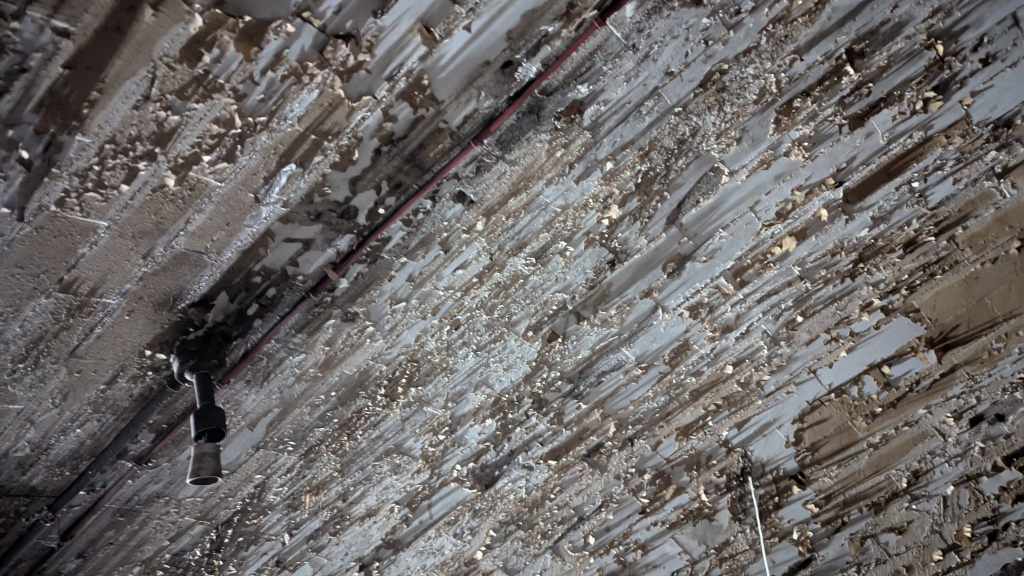
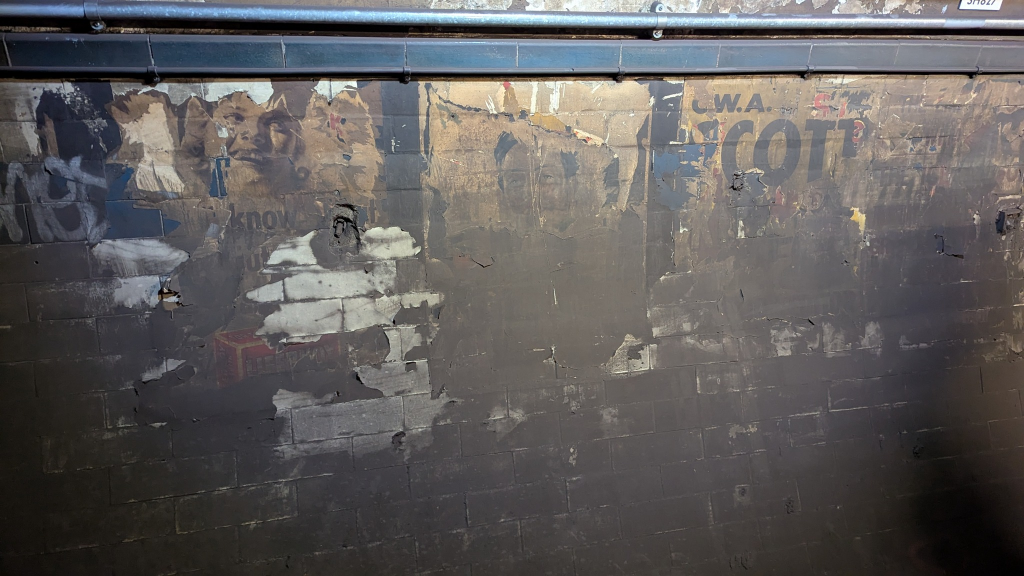
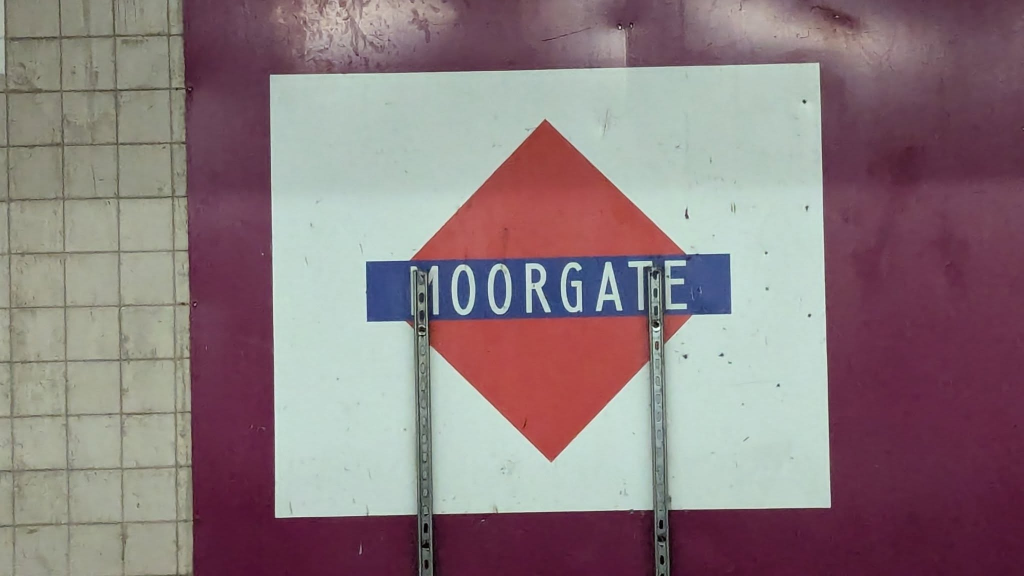
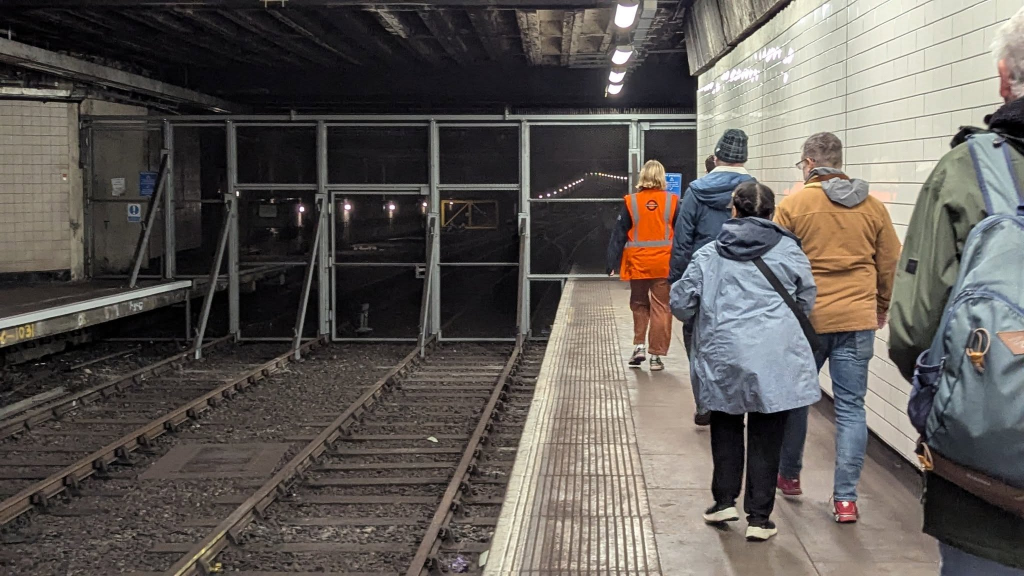
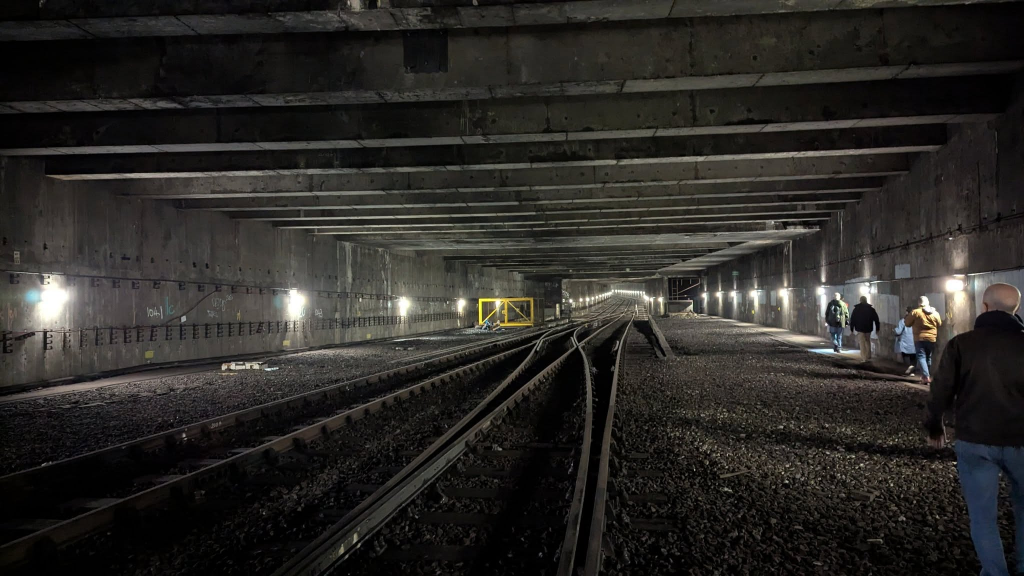
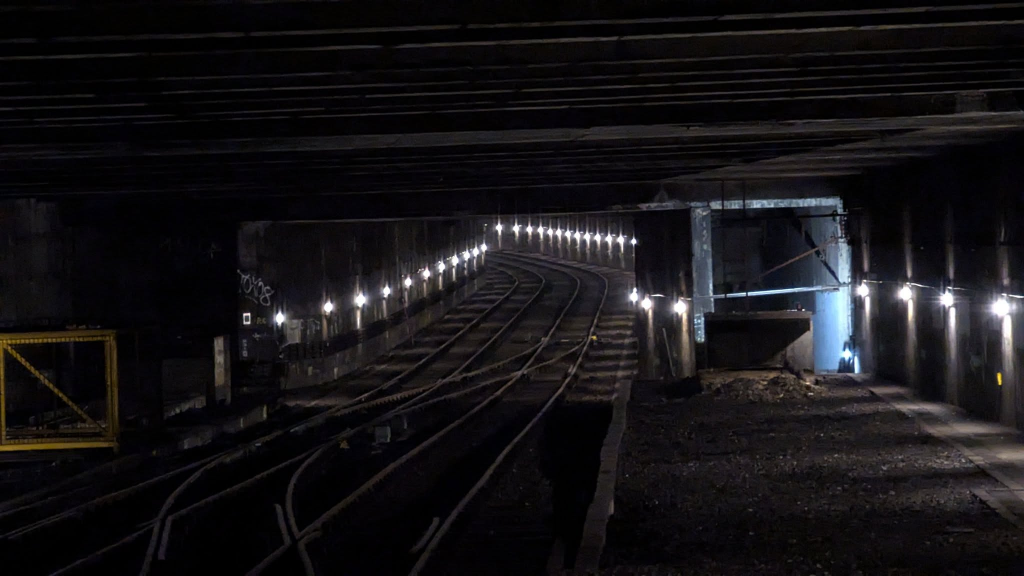
“Mind the Gap” – looking down on the Northern Line through the ventilation grille, a fun little video clipAfter lunch, I moved on to Moorgate with its complex history of multiple railway companies and lines from the 1860s to the 2020sWe’re on a disused staircase – the peeling yellow paint is from WWII when this was part of the extensive use as a bomb shelter. Quite why so much yellow paint was used is unknownThe disused passageway we are in was built to link three companies’ tunnels, but closed in the 1930s when escalators were installed and so the stairways were taken out of use; these advertising posters are thus about 90 years old, but rather difficult to see the details, buried in part under decades of train brake dustWhen London Underground adopted its famous roundel logo, the then independent Metropolitan Railway copied the idea, using a diamond rather than a circle. This is a replica from 2013 introduced as part of the 150th birthday celebrationsThe City Widened Lines ran parallel with the Metropolitan Railway tracks; they were closed in 2009 when what’s now the main Thameslink line was altered to allow 12-car trains and the platforms at Farringdon were extended across the branch to Moorgate, cutting it offWe went through the gate and down into the Barbican Catacombs. This area has been used for filming including pretending to be the New York Subway and some European underground systems, but presumably no longer as the tracks are completely disconnectedWe continued a bit further down into the bowels of the Barbican, but were not permitted to take photographs there. I returned to Liverpool Street along the platform of the Elizabeth Line, which is so long that it extends from one station to the other
 by
by